

0113 808 4468
0784 202 3505
admin@northernrestoration.co.uk
Northern Restoration Ltd
Felix House
81 Otley Road
Leeds
LS6 3PS
Date: 01/09/2025
High Pressure Water Jetting
High Pressure Water Jetting Toolbox Talk
The term High Pressure Water Jetting covers all water jetting processes, including those using additives, abrasives or chemicals where there is an energy input to increase the pressure applied to water. This applies to Power Washing units that can be purchased from hardware stores to Industrial Tanker Units. Manual High Pressure Jetting, if not handled competently is a potentially hazardous process due to the power of the jet and the proximity of the operator to the jetting equipment.
The pieces of health and safety legislation applicable to High Pressure Water Jetting/Cleaning are:
1 The Health and Safety at Work Act
2 The Control of Substances Hazardous to Health Regulations (COSHH)
3 The Provision and Use of Work Equipment Regulations
4 The Personal Protective Equipment Regulations.
Along with the following industry guidance:
5 The Water Jetting Association Code of Practice.
Work Activities that may use High Pressure Water Jetting.
6 Graffiti Removal
7 High Level Building Exterior Cleaning
8 Grounds/Car Park Cleaning
9 Drain/Sewer Cleaning
10 Stone Cleaning.
Protecting the Public.
Before jetting commences an area of public exclusion should be created. This can be done with the use of cones, tape, signage or screens. Also, if the surface of this area is to be cleaned, then the area needs to be free from debris as this can be propelled at a high velocity and cause injury or damage. Authorised persons wishing to enter this area should wait until the jetting has stopped. If any unauthorised entry is detected the pressure should be shut off safely and immediately. Hoses outside the exclusion zone should be protected.
Protective Clothing.
Water at high pressure with the possible inclusion of hazardous chemicals is capable of inflicting very severe injuries. This must be subject to a suitable and sufficient risk assessment, from which can be developed a safe system of work. In most on site situations, only the use of personal protective equipment (PPE) represents a reasonably practicable means of reducing the risk to an acceptable level. The PPE required for all members of the jetting team will consist of as a minimum:
1 Safety Helmet
2 Water Proof Gauntlets
3 Heavy Duty Water-Proof Overalls
4 Hearing Protection
5 Face Shield
6 Safety Boots with metatarsal protection.
Equipment Maintenance
All equipment should be checked daily by users and weekly by supervisors for any damage or corrosion in accordance with the manufacturer’s instructions. These checks should be recorded on a log sheet.
The checklist/logsheet should include:
1 Condition of hoses and couplings. These should have common threads, be suitable for the required pressures and be free from kinks, tears or bulges.
2 Jetting guns. These should be a minimum of 1 metre long for standard operations; the trigger mechanism should be free from debris and never locked or wedged in the on position.
3 Jetting unit. This should be checked for external damage with special emphasis on connections, junction boxes, switches and supply cables. All electrical systems and their associated components should be protected from the ingress of water.
Do’s and Don’ts
1. When starting to jet, one operative should start up the unit while another holds the jetting gun with the nozzle facing the floor. If there is only one operative, the jetting gun should be placed at a safe distance with the nozzle facing away from the unit and operative, or in the jetting gun holster if one is available.
2. Carry out the cleaning operation in full PPE in the enclosed area.
3. Don’t point the jetting gun at anyone at any time.
4. Don’t leave the unit running unattended.
5. Always use two hands when carrying out operations.
6. Don’t lock the trigger on.
7. When the unit is running and no cleaning is taking place, ensure the jetting gun is facing downwards at all time. If a holster for the jetting gun is available place the gun in the holster.
8. Don’t Change the jetting nozzle while the unit is running.
9. If the jetting unit is not secured in a vehicle or on a trailer, ensure it is situated on firm level ground.
10. Don’t use on a ladder.
11. If used on a Mobile Elevated Work Platform (MEWP) or Scaffolding then the operator should be anchored to the platform by fall restraint equipment, the jetting equipment should also be secured to the working platform.
12. Always ensure electrical points are sufficiently covered and isolated if jetting equipment is used indoors.
13. Operatives should take regular breaks to recover from fatigue.
14. Control of Substances Hazardous to Health (COSHH) assessments should be carried out if any cleaning chemicals are used in the process.
High Pressure Water Jet Injuries.
Pressure injection injuries, especially to the hand and upper extremities are serious injuries, which could lead to the loss of life or limb. The pressure required to penetrate the surface of the skin is 6.89 bar/100 psi. However, pressures used for High Pressure Jetting in industry can exceed 172 bar/2500 psi.
The pattern of tissue damage from a high pressure water injury can be similar to that of a gunshot wound and can be very extensive with small entry and large exit points.
Also, there is a high probability of infection from these injuries as contaminants can be driven deep into the surrounding tissue travelling along visceral planes, nerves or tendon sheaths resulting in vascular compression and local necrosis which could eventually lead to amputation.
All High Pressure Water Jetting injuries should be treated as surgical emergencies and the injured party should be referred to hospital with the potential severity recognised immediately. As well as the wound being treated, prophylactic broad spectrum antibiotics will be required at the earliest stage.
If an operative is taken to hospital, you must ensure that hospital staff are aware of:
1 The time of Injury
2 The nature of the material in the jet
3 The possible complications that may arise
4 Any antibiotic allergies
5 Date of last Tetanus injection.
I confirm that I have received the above toolbox talk on High Pressure Water Jetting and understood the content and its application:
STANDARD OPERATING PROCEDURE
Operation/Equipment: Pressure Steam Washing
According to manufacturer’s guidelines and required policies within the laboratory and university, special precautions must be taken when operating equipment or performing procedures within the laboratory. The following information includes recommendations for operation and any procedures needed in order to operate equipment within the laboratory. This Standard Operating Procedure will be followed along with the requirements of the Hazard Communication Plan
Brief description of operation and/or equipment in use: High pressure steam cleaning. Refer to the manufacturer’s operator manual for specific operational and safety guidelines.
**Attach additional pages as needed**
Brief Safety Overview:
● The Principal Investigator is responsible for training employees using the equipment on site. The training should include a discussion of the known and potential hazards of material used in conjunction with material; an explanation of the relevant policies, techniques and procedures including the proper use of personal protective equipment, emergency/spill procedures and containment equipment (engineering controls).
● Limit access to authorized users.
● Require applicable training.
Equipment used during operation:
Location of operation/equipment:
Handling and Storage Instructions:
Cleaning with Pressurized Steam:
1. Steam cleaning uses superheated dry steam delivered under pressure. It has a dual cleaning and disinfectant function: the high temperature of the steam is very efficient at killing micro-organisms, while the pressurized steam loosens dirt and greasy deposits, which are then pulled into the machine using vacuum suction.
2. It is suggested that correct use of the machines is at least as effective as conventional cleaning at removing soiling from surfaces, and will be better than conventional cleaning at cleaning crevices and other difficult to reach surfaces.
3. Correct training in the use of steam cleaners is particularly important. As soon as steam is released into the atmosphere for cleaning it will rapidly, in less than one second, condense into minute water droplets. Through evaporation, the water droplets will cool very quickly. Moist heat above 80°C will kill pathogens except bactericidal spores. If the steam nozzle is too far away from the surface being treated, or passes over it too quickly, this temperature will not be reached. The achievement of an effective level of performance, therefore, depends entirely on the skill and training of the user, in ensuring that the steam nozzle remains the optimum distance from the treated surface and that each part of the surface receives optimum length of exposure.
4. Follow manufacturer’s operator manual for specific operational and safety guidelines. Attach operational procedures from specific equipment manual to this SOP.
Pressure Washer Safety Requirements:
Pressure washing or power washing is the use of high-pressure water spray (usually between 750 to 4000 psi) to clean surfaces and remove grime, debris and dirt from surfaces and objects such as buildings, vehicles and concrete surfaces. Safety requirements include:
- Wear proper Personal Protective Equipment – boots, safety glasses, gloves and hearing protection are required.
- Always operate pressure washer in a well-ventilated area free of flammable vapors, combustible dust, gases or other combustible materials.
- Keep clear of nozzle and spray! Never put your hand, fingers or body directly over the spray nozzle
- Never point the high-pressure discharge spray at yourself or anyone else. Always keep operating area clear of all persons.
- High pressure hoses and fuel lines should be inspected before each use for signs of wear. If evidence of failure exists, promptly replace all suspect hoses and fuel lines to prevent the possibility of injury from the high-pressure spray. If a hose or fitting is leaking never place your hand directly on the leak.
- Wet surfaces can be slippery, wear protective foot gear, and keep good footing and balance at all times.
PPE required: Based on manufacturer’s recommendations and label of any cleaning chemicals being used.
Skin/Body Protection (example: Lab Coat)
Eye protection
Face shield
Respirator (example: N95):
Hand protection (example: Nitrile gloves):
Cleanup/Decontamination procedures for work area/equipment after use:
This Standard Operating Procedure must be placed in the Hazard Communication Plan. All laboratory personnel must be familiar with safe handling practices (i.e., training with documentation of training) when working with this equipment. This must be incorporated into the comprehensive Hazard Communication Plan of the laboratory. If you have any questions regarding a comprehensive mandatory laboratory chemical hygiene plan please contact your Representative at Environmental Health and Safety (292-1284).
Complying with working at height regulations 2005
The Regulations apply to all work at height where there is risk of a fall that is liable to cause personal injury. They place duties on employers, the self-employed and any person who controls the work of others (such as facilities managers or building owners who may contract others to work at height).
As part of the Regulations, duty holders must ensure:
• All work at height is properly planned and organised.
• Those involved in work at height are competent.
• The risks from work at height are assessed, and appropriate work equipment is selected and used.
• The risks of working on or near fragile surfaces are properly managed.
• The equipment used for work at height is properly inspected and maintained.
There is a simple hierarchy for managing work at height and selecting the appropriate access equipment.
Duty holders must:
• Avoid work at height where possible, for example doing the work from ground level.
• Use work equipment or other measures to prevent falls, where work at height cannot be avoided.
• Use work equipment or other measures to minimise the distance and consequences of potential falls, where the risk cannot be eliminated.
Using Mobil Elevated Work Platforms (MEWPS)
When using a MEWP, the following questions MUST be considered:
• Height – How high is the job from the ground?
• Application – Do you have the appropriate MEWP for the job? (If you’re not sure, check with the hirer or manufacturer)
• Conditions – What are the ground conditions like? Is there a risk of the MEWP becoming unstable or overturning?
• Operators – Are the people using the MEWP trained, competent and fit to do so?
• Obstructions – Could the MEWP be caught on any protruding features or overhead hazards, eg steelwork, tree branches or power lines?
• Traffic – Is there passing traffic and, if so, what do you need to do to prevent collisions?
• Restraint – Do you need to use either work restraint (to prevent people climbing out of the MEWP) or a fall arrest system (which will stop a person hitting the ground if they fall out)? Allowing people to climb out of the basket is not recommended – do you need to do this as part of the job?
• Checks – Has the MEWP been examined, inspected and maintained as required by the manufacturer's instructions and have daily checks been carried out?
Make sure MEWPS can get to right height, do not lean out.
Make sure guard rails and toe boards are in place, think about work resistant equipment.
Select the right MEWP for the job. MEWPS can be used indoors and out.
Who is competent to work at heights?
Competency is a combination of the experience, knowledge and appropriate qualifications that enables a worker to identify both the risks arising from a situation and the measures needed to deal with them. Individuals working at height need to be trained in the selected system of work and any particular work equipment chosen. For example, if a MEWP is selected then the operator must be trained in its use; if nets are used then the net riggers must be trained in how to erect them safely. Managers should check that those doing the work are adequately trained.
What should you know about fall protection?
If you are at risk for falling three meters or more at your workplace, you should wear the appropriate fall protection equipment.
If fall protection is required, establish a complete fall protection program if one is not in place. The program should include training workers, selecting, fitting, and inspecting the equipment.
What should you know about fall protective equipment?
• Inspect your equipment before each use.
• Replace defective equipment. If there is any doubt about the safety of the equipment, do not use it and refer questionable defects to your supervisor.
• Replace any equipment, including ropes, involved in a fall. Refer any questionable defects to your supervisor or check with the manufacturer.
• Every piece of fall arrest equipment should be inspected and certified at least yearly or more often by a trained and competent person. Keep written records of inspections and approvals.
• It is advisable to use energy absorbers if the arresting forces of the lanyard alone can cause injury.
• Follow the manufacturer’s instructions about:
o the purpose of the device,
o hazard warnings,
o instructions and limitations on use,
o the stretch distance of the harness,
o instructions for fitting and adjusting,
o recommendations for care (cleaning, maintenance, and storage) and inspection,
o the purpose and function of the fall arrest indicator,
o a warning if a fall occurs or inspection reveals an unsafe condition that the device be taken out of service until it has been determined safe for use or destroyed, and
o instructions for proper application, use, and connecting to full body harness of any evacuation device.
• Use the right equipment for the job, in accordance with manufacturer’s guidance.
How do you inspect the webbing (body of belt, harness or lanyard)?
• Inspect the entire surface of webbing for damage. Beginning at one end, bend the webbing in an inverted "U." Holding the body side of the belt toward you, grasp the belt with your hands six to eight inches apart.
• Watch for frayed edges, broken fibres, pulled stitches, cuts or chemical damage. Broken webbing strands generally appear as tufts on the webbing surface.
• Replace according to manufacturers' guidelines.
How do you inspect the buckle?
• Inspect for loose, distorted or broken grommets. Do not cut or punch additional holes in waist strap or strength members.
• Check belt without grommets for torn or elongated holes that could cause the buckle tongue to slip.
• Inspect the buckle for distortion and sharp edges. The outer and centre bars must be straight. Carefully check corners and attachment points of the centre bar. They should overlap the buckle frame and move freely back and forth in their sockets. The roller should turn freely on the frame.
• Check that rivets are tight and cannot be moved. The body side of the rivet base and outside rivet burr should be flat against the material. Make sure the rivets are not bent.
• Inspect for pitted or cracked rivets that show signs of chemical corrosion.
How do you inspect the rope?
• Rotate the rope lanyard and inspect from end to end for fuzzy, worn, broken or cut fibres. Weakened areas have noticeable changes in the original rope diameter.
• Replace when the rope diameter is not uniform throughout, following a short break-in period.
• The older a rope is and the more use it gets, the more important testing and inspection become.
What should you know about hardware (forged steel snaps, "D" rings)?
• Inspect hardware for cracks, dents, bends, rust, signs of deformation, or other defects. Replace the belt if the "D" ring is not at a 90 degree angle and does not move vertically independent of the body pad or "D" saddle.
• Make sure that any hardware is not cutting into or damaging the belt or harness.
• Inspect tool loops and belt sewing for broken or stretched loops.
• Check bag rings and knife snaps to see that they are secure and working properly. Check tool loop rivets. Check for thread separation or rotting, both inside and outside the body pad belt.
• Inspect snaps for hook and eye distortions, cracks, corrosion, or pitted surfaces. The keeper (latch) should be seated into the snap nose without binding and should not be distorted or obstructed. The keeper spring should exert sufficient force to close the keeper firmly.
What should you look for during the safety strap inspection?
• Inspect for cut fibres or damaged stitches inch by inch by flexing the strap in an inverted "U." Note cuts, frayed areas or corrosion damage.
• Check friction buckle for slippage and sharp buckle edges.
• Replace when tongue buckle holes are excessively worn or elongated.
How do I clean my equipment?
Basic care prolongs the life of the unit and contributes to its performance.
• Wipe off all surface dirt with a sponge dampened in plain water. Rinse the sponge and squeeze it dry. Dip the sponge in a mild solution of water and commercial soap or detergent. Work up a thick lather with a vigorous back and forth motion.
• Rinse the webbing in clean water.
• Wipe the belt dry with a clean cloth. Hang freely to dry.
• Dry the belt and other equipment away from direct heat, and out of long periods of sunlight.
• Store in a clean, dry area, free of fumes, sunlight, corrosive materials, sharp edges, or vibration and in such a way that it does not warp or distort the belt.
Examples of defects and damage
The following defects and damage have the potential to result in the degradation and/or weakening of the lanyard:
Cuts of 1 mm or more at the edges of webbing lanyards (e.g. where the lanyard may have been choke-hitched around steelwork);
• Surface abrasion across the face of the webbing and at the webbing loops, particularly if localised;
• Abrasion at the edges, particularly if localised;
• Damage to stitching (e.g. cuts or abrasion);
• A knot in the lanyard, other than those intended by the manufacturer;
• Chemical attack which can result in local weakening and softening – often indicated by flaking of the surface. There may also be a change to the colour of the fibres;
• Heat or friction damage indicated by fibres with a glazed appearance which may feel harder than surrounding fibres;
• UV-degradation which is difficult to identify, particularly visually, but there may be some loss of colour (if dyed) and a powdery surface;
• Partially deployed energy absorber (e.g. short pull-out of tear webbing);
• Contamination (e.g. with dirt, grit, sand etc) which may result in internal or external abrasion;
• Damaged or deformed fittings (e.g. karabiners, screw link connectors, scaffold hooks);
• Damage to the sheath and core of a kern mantel rope (e.g. rucking of the core detected during tactile inspection);
• Internal damage to a cable-laid rope.
Withdrawing lanyards from use
Lanyards should be withdrawn from use and passed to a competent person for a detailed inspection to decide whether they should continue to be used, destroyed or returned to the manufacturer for testing* to enable a product performance history to be determined, if:
• There is no evidence that a lanyard has been inspected by a competent person within the last six months;
• Identification is not evident (lanyards should be indelibly and permanently marked in accordance with BS EN 365:2004. They should be uniquely identifiable so that they can be easily associated with their respective inspection documentation);
• A lanyard is still in use and marked to the old British Standard BS 1397:1979 Specification for industrial safety belts, harnesses and safety lanyards (i.e. pre CE-marking);
• A lanyard is thought to be defective, or if there is any doubt about its safety after a pre-use check or interim inspection.
A lanyard that has been used to arrest a fall should never be reused. It should be withdrawn from service immediately and destroyed or returned to the manufacturer.
PROCEDURES FOR PREVENTING NEEDLE STICK INJURIES
1. Full protective clothing to be worn at all times whilst assessing the area.
2. Litter pickers provided.
3. Sharps and disposable box provided.
4. If ever unsure of how to handle contact employer straight away.
What to do if you receive a sharps injury:
• Encourage the wound to gently bleed, ideally holding it under running water.
• Wash the wound using running water and plenty of soap.
• Don't scrub the wound whilst you are washing it.
• Don't suck the wound.
• Dry the wound and cover it with a waterproof plaster or dressing.
• Seek urgent medical advice (for example from your Occupational Health Service) as effective prophylaxis (medicines to help fight infection) are available.
• Report the injury to your employer.
Disposing of your full sharps bin:
When sharps bin is full, it is to be returned to GP surgery or local pharmacy. Some GP surgeries and pharmacies run free collection services.
If
you have a medical condition such as diabetes, you can ask your local council
to collect your sharps bin. Local councils can charge for this service.
Using your sharps bin:
You can use your sharps bin to dispose of medical supplies such as:
• Needles
• Syringes
• Lancets used with finger-pricking devices.
• Clippers
After you’ve used needles or similar medical supplies, put them into the sharps bin immediately. Do not try to take them out again. Boxes must only be filled to the manufacturers’ line, and should be disposed of every three months even if they are not full.
Northern Restoration Health and Safety Policy Statement
Northern Restoration Limited (Known herein as the company) recognises its duties and responsibilities under the Health and Safety at Work Act 1974 and will comply with all statutory duties for Health & Safety to ensure as far as reasonably practicable, the health, safety and welfare of all employees and other parties who may be affected by our direct work activities.
The Director of the company, James Weaver, is aware of their individual responsibilities and what is required to ensure the health, safety and welfare of the company’s workforce and anyone affected by our work activities. Employees will also be made aware of their responsibilities to ensure the health, safety and welfare of their own wellbeing and those effected by their actions through co-operation with the company.
Sufficient time and resources will be allowed for health and safety, and the company shall:
• Training – Ensure all employees are competent to do their tasks and give them adequate training.
• Consultation – Consult in the most appropriate manner with employees & co-workers on matters affecting their health & safety.
• Cooperation & safety of others – The company will have pre-site meetings with the client to be made aware of any hazards involved with the task at hand. Suitable signage will be used to ensure other parties are not put at unknown risk.
• Monitoring, Audit & Review – Review and revise its policy and procedures as required at regular intervals.
• Accident Reporting – The company will comply with RIDDOR and report all incidents where legally required. All accidents will be reported to management and will be recorded in the accident book.
• Fire & Emergency Procedures – The company will assess the risk of all fire hazards and will separate all combustible materials. In the case of an emergency, all staff will congregate at the designated meetings points and emergency services will be contacted.
• First Aid – First aid provision will be made available & issued to all staff for their place of work or pre-arranged with the client for external premises.
• Manual Handling – The company will assess the risk of manual handling where relevant. Training will be provided to ensure safe working practices.
• Work Equipment – Provide and maintain safe plant and equipment.
• Asbestos – If during the execution and/or undertaking of our normal work activities there is concern of asbestos being encountered/disturbed, the company will provide asbestos awareness training to ensure that asbestos can be identified. The asbestos register will be checked on client sites or will be made aware of its location before work commences.
• PPE – Personal Protective Equipment will be provided free of charge to all employees. This equipment will be suitable for the work undertaken and training will be provided for its use.
• Welfare – Maintain safe and healthy working conditions in addition to providing & arranging (client sites – where necessary) access to adequate welfare facilities such as toilets, washing facilities with potable drinking water.
• COSHH – Ensure safe handling, storage and use of all substances. An appropriate assessment will be made to ensure the risk of its use is measured.
• Risk Assessment – The company will be responsible for undertaking all risk assessments ensuring all associated hazards are identified with suitable control measure implemented. These risk assessments will be made available to all staff and reviewed amended as necessary.
• CDM – When involved in any construction related activity as defined under the Construction (Design and Management) Regulations the company will ensure that all works are sensibly planned so that the risks involved are managed from start to finish, engage with workers about the risks and the relevant controls necessary to manage them, provide information on how those risks are being managed, select the right people to undertake the works, cooperate and coordinate the works with others and communicate all relevant information effectively.
• Additionally, where the company acts a Principal Contractor for Non-notifiable projects, we will ensure that any sub-contractors used are competent to undertake the work, will be adequately monitored on-site and/or will always work under our direct supervision. Any site managers employed will be competent and have a full understand of their duties, all contractors will receive a suitable site induction prior to the commencement of the works and on an on-going basis via toolbox talks if required. A construction phase plan proportional to the risks involved in the project will be produced, with reasonable steps undertaken to prevent any unauthorised access to the site. Where possible we will make use of the client’s facilities if they meet the requirements for that project. If this is not the case, we will ensure that adequate temporary welfare facilities are in place prior to the project starting,
Environmental Policy Statement
Commitment
Northern
Restoration, as a restoration business is committed to achieving the highest
standards of environmental performance and recognises its responsibility to the
environment. Northern Restoration acknowledges that its operations have a
direct and indirect environmental impact and aims to minimise that impact and
operate in an environmentally responsible manner.
Scope
This
statement applies to premises and activities within the control of Northern
Restorations head office and we will develop, implement and continuously review
our environmental management system consistent with local operating conditions
and legislation.
General
Policy
This
statement reflects Northern Restorations intention to provide and maintain an
environmentally sustainable management system.
Although
the standards established by national legislation will apply as a minimum,
Northern Restoration will always strive to achieve best practice in the local
context of each area in which we operate.
Statement
of principles
Northern
Restoration will, so far as is reasonably practicable:
1.
Ensure environmental risks are properly identified, prioritised and managed in
an appropriate and timely way.
2.
Establish sound environmental management policies and promote best practice.
3.
Manage its operations in ways that are environmentally sustainable and
economically feasible, by making efficient and environmentally responsible use
of energy and water and exploiting opportunities to maximise efficiency.
4.
Minimise environmental impact and reduce or, where practicable, prevent
pollution.
5.
Minimise waste production by reduced consumption and develop effective waste
management and recycling procedures.
6.
Collaborate with key suppliers to promote environmentally responsible
procurement of goods and services.
7.
Monitor actively results and audit policies and practices to ensure Northern
Restoration meets its policy goals.
8.
Develop an HR policy to raise and maintain awareness amongst staff and promote
individual good practice and encourage team participation.
9.
Recognise the legitimate interest that all customers, and employees have in its
environmental performance and communicate openly with the outside community.
It is
the duty of all employees to conform to the environmental policy.
Quality Policy Statement
Northern Restoration High Pressure Cleaning and Restoration Services provide a high quality and Professional service to commercial and residential customers throughout Yorkshire, Lancashire and surrounding areas. We are committed, through our quality assurance programme, to maintain the highest levels of customer satisfaction.
We aim:
• To comply with all relevant legislation and adopt the highest possible standards within the cleaning and restoration industry.
• To continually improve the effectiveness of our quality management system.
• To ensure full compliance with the ISO 9001:2008 standard.
• To set quality objectives and targets annually.
• To liaise with our customers to ensure their satisfaction of our quality programme.
• To communicate our quality policy to all our employees and ensure that it is understood.
• To ensure the availability of sufficient resources to maintain our quality assurance programme.
• To review the quality system and quality objectives annually, in accordance with our quality assurance procedures.
The company will apply this quality assurance programme to all contracts. Therefore, all procedures and instruction detailed in the quality statement are mandatory.
NR SAFEGUARDING POLICY
Northern Restoration Limited promote the following principles:
• Everyone has the right to live their life free from violence, fear and abuse .
• All individuals have the right to be protected from harm and exploitation .
• All individuals have the right to self-determination, which involves a degree of risk.
What is safeguarding?
It might be difficult to accept, but every child can be hurt, put at risk of harm or abused, regardless of their age, gender, religion or ethnicity.
Safeguarding legislation and government guidance says that safeguarding means:
• protecting children from maltreatment
• preventing impairment of children’s health or development
• ensuring that children are growing up in circumstances consistent with the provision of safe and effective care.
• Taking action to enable all children and young people to have the best outcomes and
“the action we take to promote the welfare of children and protect them from harm - is everyone’s responsibility. Everyone who comes into contact with children and families has a role to play.”
We all have a responsibility for safeguarding - no one agency or individual can do it alone. Whether or not you work directly with children or vulnerable adults, there will be things that you can do to keep them safe, secure and well cared for.
As an employee of Northern Restoration Limited you need to report any suspicions that a child, young person or vulnerable adult is being abused or treated in a way that is likely to cause, or is causing, distress or harm. You should also ensure that you understand what to do and who to contact if you have concerns.
So safeguarding needs to be at the centre of what we do - we all need to plan our services and play our part in ensuring that children, young people and vulnerable adults are kept safe. Safeguarding can be about thinking about how our actions will impact on the wellbeing of children, young people and vulnerable adults.
In order to help you put safeguarding at the heart of what you do, please think
about what you can do in your professional life to help keep children and vulnerable adults safe from harm. Try to make the pledges as practical and specific as you can, and related to the work that you do.
DISCIPLINARY POLICY AND PROCEDURE
STATEMENT OF POLICY
1. The aim of the Northern Restoration Disciplinary Policy is to help and encourage employees to improve, achieve and maintain standards of conduct, attendance and job performance. It also enables management to deal effectively with those employees who do not comply with the Company standards of conduct, attendance and performance in the workplace. Equally, the policy and procedure are designed in a manner which is non-discriminatory and which is fair, consistent and effective. It must also be applied in a timely manner and without undue delay.
.2. All Managers have a responsibility for ensuring that employees are made aware of the Disciplinary Policy and Procedure. All employees are to be informed of the standards of conduct and work performance expected of them and Managers should ensure that these standards are fully understood by those who work to them. Action taken under this policy must reflect fully the process detailed in the Procedural Appendix attached to this policy.
3. Matters relating to or arising under the Disciplinary Policy and Procedure must be treated as confidential at all times. Failure to do so may itself constitute grounds for initiating disciplinary action.
KEY PRINCIPLES
4. At each stage of the Disciplinary Procedure attached to this policy, the employee has a right to be accompanied by an accredited Trade Union representative or work colleague. The employee will also be informed in writing of:
• The nature of the complaint or allegation against them; and
• The stage at which the matter is being considered.
5. The employee will also be reminded that they will be given a full opportunity to state their case and if action is taken, what improvement is required. They will also be reminded of their right of appeal.
6. Managers whose responsibilities require them to participate in or hold disciplinary meetings will be given appropriate training to enable them to undertake their role effectively and dispassionately.
7. Employees should make every effort to attend meetings or interviews relating to the application of the Disciplinary Procedure. If an individual is unable to attend, they will need to give notice and the reasons why they are unable to attend. The meeting will then be re-scheduled to a mutually convenient time. Unless the reasons are exceptional, the re-arranged meeting must take place within 10 working days. However, where an employee fails to attend such meetings more than once without compelling reasons, then meetings may be held in the employee’s absence. Where this measure is invoked, the employee will be informed of this in writing.
8. Those responsible for making arrangements under the Disciplinary Policy and Procedure must ensure that any necessary, reasonable adjustments required by the employer or other attending have been addressed. This may relate to disability or to the requirements of religious beliefs.
9. Should an employee have an objection to the person or persons appointed to investigate or hold meetings in connection with the disciplinary matter they must raise this objection in writing, clearly stating the reasons to Human Resources / Head Office. Such objection must be made within two working days of the notification about the matter under investigation being brought to their attention.
10. The nature of the disciplinary action taken will be determined according to the nature and seriousness of the alleged misconduct and a dispassionate assessment of the facts based on the balance of probabilities. Where misconduct is established and the sanction is a warning then subsequent misconduct within the currency of the warning may result in further and potentially more serious action which may ultimately result in dismissal. However, no employee will be dismissed for a first instance of misconduct but summary dismissal may occur where gross misconduct is established. Employees have a right of appeal against any disciplinary warning or sanction.
11. The Company’s Disciplinary Policy and Procedure will not apply to any employee who is in their period of probation. Also, any proposed application of this policy to accredited Trade Union representatives must be the subject of prior consultation with Human Resources / senior management who will notify a senior full-time official of the Trade Union concerned.
12. Should an employee raise a complaint under the Company’s Grievance Policy, or any other related policy, whilst the subject of action under the Disciplinary Policy and Procedure and the complaint relates directly or indirectly to the matter under investigation, then action under the Disciplinary Policy will be adjourned whilst an urgent enquiry into the complaint is carried out. If the grievance or complaint is rejected or found to have no bearing on the matter being investigated under the Disciplinary Policy, then the disciplinary proceedings will continue from the point at which they were adjourned.
13. Data relating to the application of this Policy and Procedure will be held and destroyed in accordance with the provisions of current data protection regulations (including the General Data Protection Regulations) and any Company policy which derives from those regulations.
14. In accordance with the current equality legislation, this procedure will not discriminate, either directly or indirectly, on the grounds of gender, race, colour, ethnic or national origin, sexual orientation, marital status, religion or belief, age, trade union membership, disability, offending background or any other personal characteristics.
15. This policy and procedure will be reviewed periodically giving due consideration to any legislative changes.
APPENDIX
DISCIPLINARY PROCEDURE
16. The purpose of the Disciplinary Procedure is the achievement of positive improvements by employees where shortcomings or failures are identified. Any failure to attain required standards will be brought to the attention of the employee concerned at the earliest opportunity wherever possible via the informal procedure detailed below. The attention of managers is, however, drawn to the Key Principles above where the employee whose performance or conduct has given rise to concern is an accredited Trade Union representative or is a new employee still within their probationary period.
Informal Procedure
17. This procedure should be used where the lapse in performance or conduct can reasonably be said to be minor and an isolated instance. Such matters should be addressed promptly by managers by way of an informal advisory discussion. The objective will be to ensure the employee recognises and accepts their shortcomings, offer encouragement and help to improve and secure a commitment to do so. A note of the discussion should be made for reference purposes and there should be no recourse to the formal procedure.
18. Examples where the Informal Procedure may be appropriate include, infrequent lateness, carelessness, lack of effort, minor insensitive behaviour toward colleagues. The use of the Informal Procedure is simply an aspect of normal day to day management. The line manager should make it clear that if the required improvement does not take place, consideration will necessarily be given to the use of the Formal Procedure.
Formal Procedure
19. The Formal Procedure will be applied where an employee does not respond appropriately or adequately to informal action or the manager considers that the breach of conduct that is believed to have occurred is too serious to be dealt with informally. Examples of behaviour that may constitute misconduct resulting in disciplinary action are set out at Annex A to this Appendix, as are examples of behaviour which may constitute gross misconduct. In using the Formal Procedure and determining whether the employee has committed ‘misconduct’ or ‘gross misconduct’, the burden of proof required on a dispassionate and objective assessment of the facts is the balance of probability.
Investigation
20. Before disciplinary proceedings can take place, a wholly impartial investigation must be undertaken to collect information relating to the allegations and to determine whether the case should proceed to a disciplinary meeting. An Investigating Officer will be appointed by the relevant line manager. The Investigating Officer should where possible meet the following criteria:
• Be wholly independent and have no connection whatsoever to the matter under investigation;
• Be able to undertake the investigation promptly and unless there is particular complexity or non-availability of key interviewees, complete enquiries and provide a report within 15 working days, indicating what action, if any, should be considered.
21. Upon receipt of the Investigating Officer’s report, the relevant line manager must decide what action, if any, should be taken. Three courses of action are available:
• There is no case to answer. In such circumstances, the employee concerned must be told immediately should that be the case;
• That the matter can be resolved through guidance, counselling or further training;
• That there is a case to answer and that a disciplinary meeting requires to be convened.
•
The Disciplinary Meeting (See also Annex B).
22. Before the disciplinary meeting the employee will be advised in writing of the purpose of the meeting and details of the complaint or allegation being considered, covering all issues to be discussed. The individual will be given a minimum of 5 working days notice of the disciplinary meeting. If the individual’s representative or work colleague is not available to attend on the date proposed, the Company will endeavour to offer an alternative reasonable date within 5 working days of the original date. Note: This meeting will normally only be re-arranged once, except in exceptional circumstances
23. Should either party wish to call any witnesses to the disciplinary meeting they must give at least 3 working days’ notice to the Disciplinary Panel, and have full responsibility for arranging the attendance of these witnesses.
24. All relevant facts and evidence will be made available to the employee at least 5 working days prior to the disciplinary meeting. Additional information gathered by the employee that they wish to present at the meeting, must also be made available to the disciplinary panel at least 1 working day prior to the meeting. Either party may present evidence including details of previous relevant warnings, witness statements, call witnesses and have the opportunity to ask questions. An adjournment must be held in order that there can be a period of dispassionate reflection by the Disciplinary Panel to consider what action, if any, is to be taken. Where possible, both parties will be verbally informed of the outcome after the adjournment.
25. The employee will be advised in writing of the outcome of the disciplinary meeting within 7 working days unless a longer period is specified and can be justified. If disciplinary action is taken, the employee will be informed of the required improvements which are necessary and if applicable details of timescales for achievement, the duration of the warning and the consequence of a failure to improve performance as required. The letter must include the date of the disciplinary meeting, the reason for issuing the warning as well as details of any sanctions which may be imposed. It should also be noted whether the employee invoked their right to be accompanied. The right of appeal will also be included.
Warnings and Penalties
26. The outcome of the disciplinary meeting will generally fall into one of the following categories:
• Case dismissed - no further action required
• The employee is required to attend counselling or retraining
• Verbal warning
• First written warning
• Final written warning
• Dismissal
27. Other possible sanctions may involve demotion, transfer to another post or location, or the right to self-certificate sickness absence.
28. The above sanctions may be applied as follows:
29. Verbal Warning: In cases of an initial or minor issue, the verbal warning is appropriate.
30. First Written Warning: If the issue is more serious or if there is a still an active Verbal Warning in place and insufficient improvement has been made or further misconduct occurs, a First Written Warning will normally be issued. A first written warning will normally be valid for 6 months from the date of the disciplinary meeting.
31. Final Written Warning: If the issue is even more serious or if there is a still an active First Written Warning in place and insufficient improvement has been made or further misconduct occurs, a Final Written Warning will normally be issued. A final written warning will normally be valid for 12 months from the date of the disciplinary meeting. In exceptional cases validity may be longer.
32. Dismissal with Notice: If within 12 months of the issue of a Final Written Warning further misconduct occurs or insufficient improvement has been made, the employee will normally be dismissed with notice. The employee will be provided with written reasons for dismissal, the date on which the employment will terminate, their entitlement to pay, and the right of appeal. [Company] reserves the right to make a payment in lieu of notice.
33. Summary Dismissal: Where behaviour or misconduct is sufficiently serious to constitute gross misconduct, the employee will normally be summarily dismissed - i.e. without notice. The employee will be provided with written reasons for dismissal, the date on which the employment will terminate and the right of appeal.
Expiry of Warnings
34. A record of any disciplinary sanction will be placed on the employee’s personal file. A sanction will be considered to be spent and the record removed from the file provided that the employee’s conduct has been considered to be satisfactory throughout the period following the imposition of the sanction.
Dismissal
35. The decision to dismiss an employee may only be taken by a person designated by [Company] to have such authority or the instruction of a person so designated. No dismissal may take place without consultation with and the involvement of a senior manager / Director / Business Owner.
36. Where dismissal occurs, whether with notice or summary, following the establishment of gross misconduct, the employee and their representative will be provided with a letter setting out the Company’s decision. The letter, which must be sent to the employee by recorded delivery, must give details of those present at the disciplinary meeting, excluding witnesses, details of the allegation(s) and the evidence presented, the terms of the decision to dismiss and the reasons and the date on which the employment will terminate and if a dismissal with notice, the notice period. In all cases, the right of appeal will be specified.
Appeals
37. Any employee who receives a disciplinary warning, other sanction or notice of dismissal has the right of appeal. Appeals must be lodged in writing with Head Office (contact point to be specified in the letter of notification) within 10 working days of the date of the written notice of the sanction. This period may be extended only in exceptional circumstances. The notice of appeal must state the grounds of the appeal.
38. Appeals will be heard within 15 working days of the receipt of the notice of appeal by a more senior manager than the person taking the action at first instance. Where possible, all appeal panels will include a senior manager / representative of Human Resources. Both parties to the appeal must provide a full written statement of the case including the grounds upon which the appeal is made/resisted together with copies of any documents to which reference will be made. All documents and the details of witnesses, if any must be notified to all parties, 5 working days before the hearing takes place. The Appeal Hearing will follow the procedure set out in Annex C to this Appendix.
39. The decision of the Appeal Hearing is final.
Criminal Offences
40. Disciplinary action should not be taken automatically against an employee because he/she has been arrested, charged or convicted of a criminal offence, as the matters may not be work-related and may have no relevance or impact within the workplace. Each case must be carefully considered by managers according to the particular circumstances.
41. Disciplinary action may be considered in circumstances where, for example, the employee has been convicted and the nature of the conviction or sentence or both:
• Impairs the business or reputation of [Company] and/or;
• Makes the individual unsuitable for continued employment given the nature of the business of the Company or the employee’s role;
• Would be unacceptable to other employees.
42. Should disciplinary action be progressed, the normal investigative policy and procedure of investigation is to be followed to address the issue, as described in the Policy and Procedure.
43. Where an employee is unable to attend work because they are under arrest or remanded in custody, disciplinary action should not be commenced as the employee may ultimately be innocent. The position should be addressed by consideration of special or unpaid leave until the position is clarified.
Suspension
44. Suspension is not in itself regarded as a disciplinary action and does not involve any prejudgement, or imply that any misconduct has taken place. It is a neutral act to enable an investigation of the allegations made. A short period of suspension with full pay may be helpful or necessary, although it should only be imposed after careful consideration. It should also be kept under review and brought to an end as quickly as possible allowing for full investigation.
45. In cases of alleged gross misconduct or when other circumstances dictate that it is inappropriate for the employee to remain at the normal place of work, the relevant manager will consider whether suspension is appropriate in the circumstances. Where it is found there is a case to answer, a formal disciplinary meeting will be convened. Examples of circumstances that may warrant suspension include, fighting or violence between colleagues, alleged criminal offences or sensitive situations, e.g. alleged sexual assault.
46. An employee suspended from duty will be given written confirmation of the suspension and the reason for this action. Whilst on suspension, an employee must remain contactable and must be available to attend for any investigation/disciplinary meeting during normal working hours, unless mutually agreed otherwise. An employee who is suspended from duty shall, throughout the period of suspension, continue to receive full pay.
47. Whilst an employee is on suspension, they should not attempt to contact colleagues connected to the case with the exception of their Trade Union representative, work colleague (who is to accompany them at any subsequent meeting, if proven that there is a case to answer) or their line manager.
ANNEX A
MISCONDUCT LIKELY TO RESULT IN DISCIPLINARY ACTION
48. When conduct is unsatisfactory this is usually referred to as ‘misconduct’ and can vary in its degree of seriousness. Where an incident is very serious it is known as ‘gross misconduct’, and one incident can be sufficient to warrant dismissal. The following list illustrates behaviour likely to constitute misconduct and gross misconduct, but it is neither exclusive nor exhaustive and there may be other matters, which are sufficiently serious to warrant inclusion.
Misconduct
49. Misconduct is defined as behaviour which, in the view of Northern Restoration would not normally destroy the relationship of trust between employer and employee; however, the behaviour is serious enough to warrant action short of dismissal. The following list illustrates conduct likely to amount to misconduct, but again this list is neither exclusive nor exhaustive:
• absenteeism and lateness, e.g. frequent late arrival at work; failure to comply with requirements to notify sickness absence; unauthorised absence from the workplace;
• dishonesty, e.g. making unauthorised private phone calls (either excessive or inappropriate), sending personal mail at the Company's expense;
• refusal to obey a lawful and reasonable instruction of a manager or supervisor;
• failure to carry out the normal duties of the post;
• unauthorised copying of copyright or licensed material, e.g. software;
• unreasonable or unacceptable conduct, e.g. abusive language or behaviour;
• misuse of facilities, loss, damage or misuse of Company property or equipment through wilfulness, negligence or carelessness;
• threatening violence whilst at work to a colleague, service user or provider or members of the public;
• breach of Company regulations, e.g. financial regulations, health and safety, confidentiality of personal records;
• accepting significant gifts (i.e. a series of presents) or hospitality from contractors, service users, service providers or members of the public without authorisation;
• driving whilst using a mobile phone;
• incapability as a result of being under the influence of alcohol or illegal drugs at work;
• incurring any motoring offences whilst on [Company] business;
• abuse of the email, social media and/or other online systems.
50. The distinction between misconduct and gross misconduct is often a matter of degree and some of the examples under misconduct may be of such an extreme nature that they amount to gross misconduct. Alternatively, there may be instances when examples demonstrated under Gross Misconduct, depending upon all of the circumstances, may amount to misconduct.
Gross Misconduct
51. Gross misconduct is defined as behaviour, which in the view of Northern Restoration fundamentally destroys the trust between employer and employee and thereby warrants immediate dismissal. The following list illustrates conduct likely to amount to gross misconduct, but this list is neither exclusive nor exhaustive:
• theft or misappropriation or malicious damage to property of the Company, fellow employees, service users or providers;
• falsifying records or expenses claims which result in gain to the individual, e.g. registers, time sheets, car expenses, overtime, flexitime, sickness claims;
• physical violence towards colleagues, service users, service providers or other members of the public;
• serious incapability as a result of being under the influence of alcohol or illegal drugs at work;
• discriminatory behaviour relating to sexual orientation, race, gender, disability, religion or belief against other employees, service users and providers or members of the public. Northern Restoration operates a zero-tolerance approach;
• fraudulent or false claims of harassment or victimisation;
• Bribing or attempting to bribe another individual, or personally taking or knowingly allowing another person to take a bribe;
• serious breach of Company regulations, e.g. financial regulations;
• serious negligence which causes substantial loss, damage or injury;
• non-compliance with health and safety rules and regulations where it endangers the well-being of the employee or others;
• unauthorised use of Company vehicles, materials, equipment, facilities or labour for private purposes and/or personal gain;
• unauthorised deliberate access to information held by the Company whether held on electronic or manual systems;
• unauthorised disclosure of information classified as confidential by the Company;
• falsification or omission of information for personal gain, for example, on an application form, medical questionnaire, etc.;
• downloading inappropriate information from the internet, e.g. pornography;
• victimisation or bullying (either in person or via email, etc.); and
• improper use of position as a Northern Restoration employee for personal gain.
ANNEX B
CONDUCTING A DISCIPLINARY MEETING
52. A disciplinary meeting will normally be held by a panel consisting of a manager, who has not been previously involved in the matter, who will act as the Panel Chair. They will where possible be accompanied by another appropriate manager / representative of Human Resources.
53. The Disciplinary meeting follow the following stages:
• Opening the meeting by Panel Chair
• Summary of allegation by the investigating officer, including calling of any witnesses
• Employee, then the Disciplinary Panel, will have the opportunity to ask questions
• Employee to present their answer to the allegations including calling of any witnesses
• Opportunity to ask questions
• Consideration of the facts
• Opportunity for employee to make a final statement
• Adjournment
• Action to be taken (if any)
• Establishment of a review date (if appropriate)
Opening the Disciplinary meeting
54. All employees are entitled to be accompanied by their Trade Union representative or a work colleague. Where an employee is not accompanied, the employee must be reminded of this right, and if declined, this must be recorded.
55. Those ‘hearing’ the disciplinary must introduce those present and outline the reasons for the disciplinary meeting taking place (the reason/s outlined in the invite to disciplinary letter) and the format the meeting will take.
Summary of Allegations
56. At this stage the investigating officer(s) should summarise their findings. The investigating officer(s) should adhere to the facts and not introduce opinions, hearsay or issues that have not previously been mentioned. All documentation that will be used as evidence (including previous relevant warnings and witness statements where applicable) will already have been made available to the individual prior to the disciplinary meeting taking place (copies will have been sent with the invite to disciplinary meeting letter).
57. Should a new matter arise during the course of the disciplinary meeting then the Disciplinary Panel should adjourn in order that consideration may be given to the appropriateness of the introduction of this new matter. To avoid unnecessary duplication of the process as well as ensuring fairness, it may be more beneficial to adjourn the disciplinary meeting in order that further investigations may be carried out in relation to the new matter.
58. The aim of the disciplinary meeting is to seek verification and clarification about the issues of concern, through questions. Where it is appropriate to call witnesses, either party may call and question them.
59. After the investigating officer has stated the outcome of their investigation the employee will be given the opportunity to ask questions and respond. The employee’s representative will also be able to ask questions for clarification purposes.
60. If the disciplinary meeting is dealing with multiple issues, each issue should be addressed in turn and the employee and/or their representative be allowed to respond in relation to each issue as it is addressed.
61. The investigating officer may remain present during the disciplinary meeting to allow for any questions.
Adjournment
62. Before any decision is taken, it is necessary to adjourn the disciplinary meeting to give adequate consideration to the facts as they have been presented and the responses that have been given to the allegations, including any mitigating circumstances. At this stage all parties will be asked to leave the room and the panel must decide the facts of the case, with advice from Human Resources, where appropriate, and whether the behaviour requires disciplinary action to be taken and if so, at what level.
63. The disciplinary meeting may also be adjourned to consider other issues, e.g. to direct further investigations to take place or to investigate new information/facts that have been brought to light.
64. There is no set time for an adjournment and adjournments can be called at any time during the disciplinary meeting, by either party.
65. Taking disciplinary action is not a matter to be taken lightly and should only be taken if it is to be constructive in attempting to produce the desired behaviour. Managers will also need to consider, if disciplinary action is to be taken, whether any other sanctions will be attached to the warning.
Action
66. When the disciplinary meeting is reconvened the Panel Chair should explain that consideration has been given to all of the issues raised at the beginning of the meeting, and all of the facts and issues raised during the course of the meeting. The Panel Chair must then outline what action, if any, will be taken including any sanctions.
67. It is important that where a warning/sanction is given, the employee is informed of the length of time it will remain on their record, their right of appeal, the procedure that will be followed in relation to confirming the action in writing and any arrangements for the review of sanctions imposed.
Disciplinary Meeting Notes
68. The notes of the meeting will be held on file in Human Resources / Head Office. All of the documentation in relation to a Disciplinary meeting will be marked confidential.
ANNEX C
APPEALS PROCEDURE
69. Appeals will normally be heard by a more senior manager to the person taking the first instance disciplinary action. An employee may choose to appeal if, for example:
• They think a finding or penalty is unfair
• New evidence comes to light
• They think the Disciplinary Procedure was not used correctly
70. An appeal may be heard as a paper-based exercise where the manager hearing the appeal will consider the circumstances of the case and the details of the employee’s appeal (which must be submitted in writing). However, the employee may request an Appeal Hearing to present their case in person.
71. The procedure for an Appeal Hearing is as follows:
• The manager hearing the appeal will arrange a suitable date and venue
• The manager will outline the circumstances of the disciplinary action first, explaining the reasons for the actions that have been taken.
• The employee will then be able to explain the reasons for their appeal
• The manager may then wish to ask the appellant any questions about their appeal case.
• There will then be an adjournment while the manager considers the information they have heard and reach their decision.
72. The decision of the panel will be communicated to the employee verbally, wherever possible, and in any case will be confirmed in writing no later than 5 working days after the Appeal Hearing date.
Contractor Health and Safety Risk Assessment
Introduction
This Guidance Note gives practical information about undertaking risk assessments for work on client’s sites/construction sites.
Legal Obligations
Whether you are an employer or self-employed, you have a legal obligation to assess the risks in your workplace and arising from your work practices. Improving health and safety need not be costly, however, failure to make simple adjustments to the way you work and/or your workplace may have very expensive consequences.
The Management of Health and Safety at Work Regulations 1999, require that employers, and the self-employed, must undertake a suitable and sufficient risk assessment. These regulations also require employers to take particular account of young people and new and expectant mothers.
A risk assessment is simply an examination of the work you are undertaking and the environment in which this takes place. It does not have to be over complicated, but should be appropriate to the size of your company and the risks involved in the work you undertake and the environment in which this takes place.
The purpose of a risk assessment is to identify anything with the potential to cause accidents and ill health to either you, your employees, members of the public, client’s staff or other contractors on site. If this assessment identifies a significant a risk to health and safety, you as an employer or self-employed person must implement measures to either eliminate or control the risk to a reasonable level. The law does have an appreciation for the fact that it is not possible to eliminate all risk, however, it does require all risks to be controlled.
Only employers who employ 5 or more employees have a legal duty to record the significant findings of the assessment. However, it is considered good practice for all assessments to be recorded irrespective of employee number. It should be noted that when tendering for contracts, some companies might require a written risk assessment to demonstrate a commitment to health and safety.
The risk assessment must be reviewed on a regular basis, as and when there are any changes in the environment, personnel, equipment used etc. Although the employer/self- employed person has the responsibility to ensure that the risk assessment is carried out, they must also ensure that whoever undertakes the risk assessment is competent to do so. This may be via formal training or simply by virtue of time served in that particular discipline.
What is risk assessment?
A HAZARD is defined as “anything, which has the potential to cause harm”.
Examples of typical hazards are as follows: - Working at height with no edge protection – Working in the presence of asbestos containing materials – Working with chemicals.
Once the hazard has been identified it is possible to consider the risk from that hazard.
A RISK is defined as “the likelihood of a particular hazard causing harm”
Examples of typical risks are as follows: - A person falling from height – Exposure to asbestos fibres – A burn caused by a spillage of a chemical on to exposed skin.
In order to differentiate between the severities of the identified risks, it is important to give them a risk rating. Some systems use complicated scoring systems, although this is not necessary and a simple ‘Low, Medium or High’ will usually suffice.
In order to assist you with this, consider the following:
LOW
Minor impact/damage quickly repaired
MEDIUM
Moderate impact/partial loss of operations
HIGH
Disaster/very serious consequences
Risk assessments do not need to be over complicated; it is essential only to judge whether the hazards are significant and whether or not the precautions in place are satisfactory.
Conducting Risk Assessments
In most cases, where work is undertaken for a one-off project, the risk assessment will need to be site or project specific. The assessment therefore needs to take into consideration the specific risks related to the work activities being undertaken in that specific project and the work environment in which it is taking place. This is particularly relevant for construction work where site conditions will change over time and from job to job. For example, a roofing job on a domestic property may involve some different hazards to one undertaken on a factory unit and even work on two different factory units may present some differing hazards. These risk assessments should last for the length of the project only or until there are significant changes which require it to be revised.
In some cases, where work is of a general nature (i.e. the service and maintenance of equipment supplied by your Company, a lengthy contract for the maintenance of specific plant and equipment, cleaning of offices etc.), it may be reasonable to have a generic risk assessment which is reviewed on an annual basis. However, there should still be provision for adding site specific information should any changes in work environment and therefore hazards present themselves.
In either case, you must identify the significant hazards associated with the work, identify who is at risk, and record in a concise easily understandable manner sufficient control measures.
Below are detailed the ‘5 steps to risk assessment’. This is not the only way to do a risk assessment, there are other methods that work well, particularly for more complex risks and circumstances. However, this is the simplest method that works for common workplaces.
Step 1 Identify the hazards
First you need to work out how people could be harmed. When you work in a place every day it is easy to overlook some hazards, so here are some tips to help you identify the ones that matter: · Contact client to obtain information about site where work is to take place / Walk around work site and look at what could reasonably be expected to cause harm. · Ask your employees or their representatives what they think. They may have noticed things that are not immediately obvious to you. · Check manufacturers’ instructions or data sheets for chemicals and equipment as they can be very helpful in spelling out the hazards and putting them into their true perspective. · Have a look back at your accident and ill-health records – these often help to identify the less obvious hazards. · Remember to think about long-term hazards to health (e.g. high levels of noise or exposure to harmful substances) as well as safety hazards.
Refer to the Hazard Indicator Checklist in Appendix 1 of this Guidance Note for further assistance.
List the hazards in column one on risk assessment form
Step 2 Decide who might be harmed and how
For each hazard you need to be clear about who might be harmed. There is no need to list everyone by name, but rather identify what groups of people (e.g. ‘employees’ or ‘other contractors’ or ‘passers-by’), might be at risk.
In each case, identify how they might be harmed, i.e. what type of injury or ill health might occur. For example, ‘construction workers may suffer back injury from repeated lifting of building materials’.
It is vital to be aware that some workers may have particular requirements, e.g. new and young workers, new or expectant mothers and people with disabilities may be at particular risk.
Further consideration needs to be made for the following groups; · Visitors, contractors, maintenance workers etc. who may not be in the workplace all the time. · Members of the public, if they could be harmed by your activities. · If you share your workplace, you will need to think about how your work affects others present, as well as how their work affects your staff.
List them in column 2 on risk assessment form
Step 3 Evaluate the risks and decide on precautions
Once the hazards have been identified, appropriate control measures need to be implemented. The law requires you to do everything ‘reasonably practicable’ to protect people from harm.
You need to look at the current work situation to see what you are already doing, consider what controls you have in place and how the work is organised. Then compare this with best practice to see if there is more you should be doing to bring yourself up to standard. This will mean that additional control measures are required.
With the existing and additional control measures in place you must then decide if the residual risk high, medium or low.
When looking at the situation you need to keep the following in mind: · Am I complying with legislation and Approved codes of practice? · Are all accepted industry standards in place? · Is everything that is reasonably practicable being done to reduce the risk to the lowest level possible? · Can the hazard be eliminated altogether? · If not, how can I control the risks so that harm is unlikely?
When controlling risks, apply the principles below, if possible in the following order: · Try a less risky option (e.g. switch to using a less hazardous chemical); · Prevent access to the hazard (e.g. by guarding); · Organise work to reduce exposure to the hazard (e.g. put barriers between pedestrians and traffic); · Issue personal protective equipment (e.g. clothing, footwear, goggles etc.); and · Provide welfare facilities (e.g. first aid and washing facilities for removal of contamination).
List precautions in column 3 and residual risk factor once precautions have been put into place in column 4
Step 4 Record your findings and implement them
The benefits of recording the details of your risks assessments are far more than simply compliance with the law and industry best practice. It also proves to staff and potential clients that health and safety issues have been considered and relevant action has been taken to eliminate these risks and subsequently provide a safer working environment.
When recording your results, keep it simple, over complicated assessments will not be fully appreciated by those who are expected to adhere to them.
All risk assessments carried out must be suitable and sufficient. You need to be able to show that: · A proper check was made · You asked who might be affected; · You dealt with all the significant hazards, taking into account the number of people who could be involved · The precautions are reasonable, and the remaining risk is as low as possible; · You involved your staff or their representatives in the process.
Make sure that all employees are made aware of the risk assessments and their control measures via training and communication. Appropriate supervision may be necessary to ensure that staff are adhering to control measures.
Step 5 Review your risk assessment and update it if necessary
Your risk assessments should be considered a live document and as such be reviewed on a regular basis to determine if the process, personnel or environment has altered since the time of the last assessment. Consideration must be given to changes in legislation and industry best practice. You should also consult with employees as they may have identified failings in the current control measures that have not been picked up by the risk assessment.
Risk assessments need to be revised (and a revision date documented) after: · A change of working practice · The delivery of new equipment · Any adverse event, accident, equipment failure etc.
Overview · Identify hazards · Identify who might be harmed · Identify the risks and if existing control measures are adequate · Identify if further controls are necessary · Inform, implement and monitor · Document your findings · Complete periodic review of assessments.
Further Guidance
http://www.hse.gov.uk/risk/index.htm
Appendix 1
Hazard Indicator Checklist
Hazard Type Yes No 1. Fall of person from height 2. Fall of object or material from height 3. Fall of person on same level (e.g. slip or trip) 4. Manual handling (includes: pushing / pulling as well as lifting and carrying and repetitive actions) 5. Use of machinery 6. Operation of vehicles 7. Electricity or electrical equipment 8. Drowning 9. Excavation work (where this is part of the task) 10.Stored energy (e.g. elastic cords, hydraulic & air pressured systems) 11.Explosions (e.g. from chemicals or dust) 12.Contact with excessively hot or cold surfaces 13.Compressed air or gases 14.Mechanical lifting operations 15.Noise 16.Biological agents 17.Hot work 18.Asbestos 19.Excessive vibration 20.Use of hand tools 21.Outdoor work - weather 22.Chemicals or substances 23.Storage, stacking or shelving 24.Stress 25.Lighting levels (too high or too low, glare, rapid changes) 26.Confined spaces 27.Temporary workplace 28.Use of display screen equipment (as part of the task) 29.Lone or unaccompanied working 30.Exposure to personal violence or aggression 31.Other (please state) 32.Other (please state)
Transfer all hazards identified as Yes in the tick box to column one on the risk assessment form (Appendix 2).
Appendix 2
Blank Risk Assessment Template
Key To Assessment:
LOW = Minor impact/damage quickly repaired
MEDIUM = Moderate impact/partial loss of operations
HIGH = Disaster/very serious consequences
Hazard/s People at Risk Precautions/controls required to reduce the level of risk to the lowest practicable level
Residual Risk Low/medium/high
Risk Assessment Assessment no: Company Name: Division/Department: Date Prepared: Address/Location: Review Date: Department Manager: Work activity being assessed:
Appendix 3
Sample Risk Assessment
Risk Assessment Assessment no: Company Name: Division/Department: Date Prepared: Address/Location: Review Date: Department Manager: Work activity being assessed: Key To Assessment:
LOW = Minor impact/damage quickly repaired
MEDIUM = Moderate impact/partial loss of operations
HIGH = Disaster/very serious consequences
Hazard/s People at Risk Precautions/controls required to reduce the level of risk to the lowest practicable level
Residual Risk Low/medium/high
Window Cleaner falling off ladder
Window Cleaner
· Training on safe use of ladder · Ladder angled correctly (4:1) · Ladder placed against non-fragile surface · Ladder supported on solid and flat flooring · Ladder secured either at the top/bottom or second footed by other person · Maintain three points of contact with ladder
Low
Slip, Trip or Fall incident during Cleaning activities
Members of the Public, Cleaners, Contractors
· Warning signs in noticeable places · Spillage procedure for clearing standing liquids · No storage of materials or waste in public walkways · Keep trailing lead distance to a minimum by using nearest electrical point · Segregate or close off areas where wet cleaning or buffing is undertaken
Low
Head injury caused by falling rubble on a construction site
Members of Staff, Members of Public, Contractors
· Provision of appropriate PPE e.g. hard hat · Adequate Signage notifying of hard hat area · Adequate guard rails/brick guards on scaffolding · Only minimum material stacked on scaffolding · Material adequately secured during high winds · Rubble Chutes provided into enclosed skips · Provision of pedestrian walkways to avoid work at height/skips
Low
Electric shock whilst undertaking maintenance work
Members of staff, Contractors
· Permit to Work in place · Equipment electrically isolated with lock and tag · Adequate training provided for competent person · No live work to be undertaken · Live testing to only be undertaken with insulated test equipment, rubber matting, shielding and rubber gauntlets
Low
Operating electrical office equipment
Member of staff
· All electrical Equipment to be PAT tested and labelled · Area to be kept clean and tidy · Cables to be secured · No cable runs on throughway · Plug sockets not to be overloaded · Users trained in use of office equipment
Low
Exposure to Asbestos during building maintenance
Members of staff, Contractors, Visitors
· Building asbestos register requested before work commences · Training on asbestos awareness given to operatives · If fibrous material encountered stop work · Shut down tools and machinery · Segregate area · Notify client representative and head office · Do not re-enter area until adequate clearance/notification supplied by client
Low.
High Pressure Water Jetting Toolbox Talk
The term High Pressure Water Jetting covers all water jetting processes, including those using additives, abrasives or chemicals where there is an energy input to increase the pressure applied to water. This applies to Power Washing units that can be purchased from hardware stores to Industrial Tanker Units. Manual High Pressure Jetting, if not handled competently is a potentially hazardous process due to the power of the jet and the proximity of the operator to the jetting equipment.
The pieces of health and safety legislation applicable to High Pressure Water Jetting/Cleaning are:
- The Health and Safety at Work Act – The Control of Substances Hazardous to Health Regulations (COSHH) - The Provision and Use of Work Equipment Regulations - The Personal Protective Equipment Regulations.
Along with the following industry guidance:
- The Water Jetting Association Code of Practice.
Work Activities that may utilise High Pressure Water Jetting.
Graffiti Removal, High Level Building Exterior Cleaning, Grounds/Car Park Cleaning, Drain/Sewer Cleaning, Stone Cleaning.
Protecting the Public.
Before jetting commences an area of public exclusion should be created. This can be done with the use of cones, tape, signage or screens. Also, if the surface of this area is to be cleaned, then the area needs to be free from debris as this can be propelled at a high velocity and cause injury or damage. Authorised persons wishing to enter this area should wait until the jetting has stopped. If any unauthorised entry is detected the pressure should be shut off safely and immediately. Hoses outside the exclusion zone should be protected.
Protective Clothing.
Water at high pressure with the possible inclusion of hazardous chemicals is capable of inflicting very severe injuries. This must be subject to a suitable and sufficient risk assessment, from which can be developed a safe system of work. In most on site situations, only the use of personal protective equipment (PPE) represents a reasonably practicable means of reducing the risk to an acceptable level. The PPE required for all members of the jetting team will consist of as a minimum:
- Safety Helmet - Water Proof Gauntlets - Heavy Duty Water-Proof Overalls - Hearing Protection - Face Shield - Safety Boots with metatarsal protection.
Equipment Maintenance.
All equipment should be checked daily by users and weekly by supervisors for any damage or corrosion in accordance with the manufacturer’s instructions. These checks should be recorded on a log sheet. The checklist/log sheet should include:
- Condition of hoses and couplings. These should have common threads, be suitable for the required pressures and be free from kinks, tears or bulges.
- Jetting guns. These should be a minimum of 1 metre long for standard operations; the trigger mechanism should be free from debris and never locked or wedged in the on position.
- Jetting unit. This should be checked for external damage with special emphasis on connections, junction boxes, switches and supply cables. All electrical systems and their associated components should be protected from the ingress of water.
Do’s and Don’ts.
1. When starting to jet, one operative should start up the unit while another holds the jetting gun with the nozzle facing the floor. If there is only one operative, the jetting gun should be placed at a safe distance with the nozzle facing away from the unit and operative, or in the jetting gun holster if one is available.
2. Carry out the cleaning operation in full PPE in the enclosed area.
3. Don’t point the jetting gun at anyone at any time.
4. Don’t leave the unit running unattended.
5. Always use two hands when carrying out operations.
6. Don’t lock the trigger on.
7. When the unit is running and no cleaning is taking place, ensure the jetting gun is facing downwards at all time. If a holster for the jetting gun is available place the gun in the holster.
8. Don’t Change the jetting nozzle while the unit is running.
9. If the jetting unit is not secured in a vehicle or on a trailer, ensure it is situated on firm level ground.
10. Don’t use on a ladder.
11. If used on a Mobile Elevated Work Platform (MEWP) or Scaffolding then the operator should be anchored to the platform by fall restraint equipment, the jetting equipment should also be secured to the working platform.
12. Always ensure electrical points are sufficiently covered and isolated if jetting equipment is used indoors.
13. Operatives should take regular breaks to recover from fatigue.
14. Control of Substances Hazardous to Health (COSHH) assessments should be carried out if any cleaning chemicals are used in the process.
High Pressure Water Jet Injuries.
Pressure injection injuries, especially to the hand and upper extremities are serious injuries, which could lead to the loss of life or limb. The pressure required to penetrate the surface of the skin is 6.89 bar/100 psi. However, pressures used for High Pressure Jetting in industry can exceed 172 bar/2500 psi.
The pattern of tissue damage from a high pressure water injury can be similar to that of a gunshot wound and can be very extensive with small entry and large exit points.
Also, there is a high probability of infection from these injuries as contaminants can be driven deep into the surrounding tissue travelling along visceral planes, nerves or tendons.
Control of Substances Hazardous to Health (COSHH)
Introduction
Hazardous substances can take many forms including;
- substances used directly at work for example cleaning substances, paints, solvents, adhesives etc. - Substances generated during work activities e.g. fumes or dust produces through work - naturally occurring substances; flour, grain dust, anthrax etc - biological agents such as bacteria.
Control is important, as some substances do not have immediate effects e.g. silica, and symptoms of exposure may not occur until twenty to fifty years after exposure.
Legislation
The Control of Substances Hazardous to Health Regulations 2002 (COSHH) (as amended) provides the main legislative framework for the control of hazardous substances in the workplace. Legionella bacteria (which causes Legionnaires’ disease) is covered by these regulations, and has its own approved code of practice.
COSHH sets out, in broad and general terms, the measures needed to prevent or adequately control exposure to hazardous substances in virtually every place of work. The definition of hazardous substances includes:
- Substances with a safety data sheet under REACH (Registration, Evaluation, Authorisation & restriction of Chemicals.
- Substances assigned Workplace Exposure Limits (updates to which are available on the HSE website).
- Biological agents that are used for, or produced as, part of a work activity.
- Dusts, and any substance that could pose a hazard to health in the working environment.
To make it easier any substance displaying one of the following symbols will require an assessment.
Hazard symbols
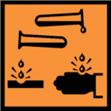




Corrosive Harmful Irritant Toxic Very toxic

New International symbols
1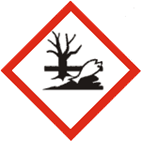 2
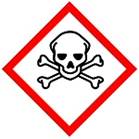 3
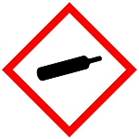 4
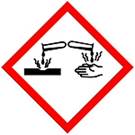
5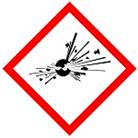 6
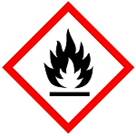 7
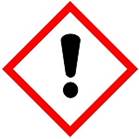 8
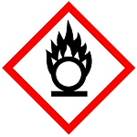
9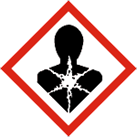
1. Harmful to the environment.
2. Acute toxicity, Very toxic (fatal).
3. Toxic Gases under pressure.
4. Corrosive (causes severe skin burns and eye damage).
5. Explosive, self-reactive, organic peroxide
6. Flammable gases, flammable liquids, flammable solids etc.
7. Harmful skin irritation.
8. Oxidising gases, liquids and solids.
9. Respiratory sensitizer, mutagen, carcinogen, reproductive toxicity, systemic target toxicity
You may find the older orange and black warning symbols are still used on some substances (these will be phased out by 2015 and are only relevant to specific substances for example adhesives, further advice is required for substances generated during a work process, naturally occurring substances and biological agents).
Assessments
The COSHH regulations require you the employer (including the self-employed) to carry out an assessment of the substances used. There are 8 steps that need to be followed:
STEP ONE
Assess the risk to health from the substances either being used or created. The assessment must take into account: - Hazardous properties of the substance - Information on the health effects provided by the supplier ( look for safety data sheet) - The level, type and duration of the exposure - The circumstances of the work - Activities (e.g. maintenance) which may increase the potential for exposure - Exposure limits - Effects of control measures - Results of monitoring - Possible combinations of substances increasing the risks - The approved classification of any biological agent - Any additional information the employer may need
Unless quantities of hazardous substances used are deemed to be so low that there is only a slight risk to the health of employees, the employer must ensure that they have arrangements in place to deal with accidents, incidents and emergencies.
This may include the provision of additional first aid facilities and safety drills.
The information concerning these arrangements must be readily available and displayed if necessary, together with the provision of suitable warning and communication systems.
Should an incident then occur, the employer must then take immediate steps to restore the situation to normal and control the effects that led to the occurrence.
STEP TWO
Decide what precautions are needed - You must not allow work to be carried out where hazardous substances are involved, without considering the risks and putting precautionary measures in place to protect employees and others who may be effected by the work.
STEP THREE
Prevent or adequately control exposure- There is a hierarchy of control measures that should be applied to hazardous substances, which is shown below in descending order of priority: -
- Elimination of the hazardous substance at source - Substitute the substance for a less hazardous alternative - Enclosure of the process - Use plant or processes which minimise the production of the hazardous substance - Partial enclosure, supplemented with the use of engineering controls
- Use of engineering controls - Increasing general ventilation - Removal of persons from the hazard - Limit the time persons are exposed to the hazardous substances (e.g. use a system of task rotation) - Increased hygiene procedures (cleaning of contamination) - Provision of information, instruction and training - Provision of Personal Protective Equipment.
STEP FOUR
Ensure the control measures are maintained and used properly and that the safety procedures are followed.
All control measures have to be maintained to ensure that they are still effective. If not otherwise specified, the measures taken should include visual checks and examinations as prescribed by the manufacturer.
There is a legal requirement to ensure that all LEV plant is thoroughly examined and tested at least once in every 14 months. There is also a requirement to ensure that RPE is thoroughly examined at least once a month, this requirement does not apply to single use disposable respirators.
STEP FIVE
Monitor exposures.
Measure the concentration of hazardous substances in the air breathed in by workers where your assessment concludes that:
- There could be serious risks to health if control measures failed - Exposure limits might be exceeded; or - Control measures might not be working properly.
Workplace exposure limits (WELs) are as the name suggests limits of the amount of hazardous substances people should be exposed to at work.
WELs are concentrations of hazardous substances in the air, averaged over a specified time period, referred to as a time-weighted average (TWA).
Two time periods are used:
- Long term exposure limits (8 hours) - Short term exposure limits (15 mins) – set up to help prevent effects such as eye irritation, which may occur following brief exposure.
Workplace exposure limits are levels above which there is a known risk to health – these must never be exceeded.
N.B. Therefore there is no absolute “safe” level of exposure for dangerous substances, and employers should aim to bring exposure to the lowest achievable level.
STEP SIX
Carry out appropriate health surveillance, if applicable
For certain hazardous substances there is a requirement to carry out health surveillance.
These substances are listed in the Regulations.
Health Surveillance may also be necessary in situations where early detection will be beneficial in arresting the progression of ill health. Refer to Guidance Note 18 – Health Surveillance for further information on this topic.
STEP SEVEN
Prepare plans and procedures to deal with accidents, incidents and emergencies.
Where the work activity may lead to risk of an accident, incident or emergency involving exposure to a hazardous substance, which goes well beyond the risks associated with normal day-to-day work, you should set up warning and communication systems to allow a suitable response immediately should any incident occur. This is to ensure information on your emergency arrangements is available to those who need to see it, including the emergency services. It also requires these 'safety drills' to be practised at regular intervals.
Only those staff necessary to deal with the incident may remain in the area and they must be provided with appropriate safety equipment.
Do not produce emergency procedures if: - The quantities of substances hazardous to health present in your workplace are such that they present only a slight risk to your employees' health; and - The measures you have put in place under Step 3 are sufficient to control that risk; BUT, the requirements described in Step 7 must be complied with in full where carcinogens, mutagens or biological agents are used.
STEP EIGHT
Ensure employees are properly informed, trained and supervised. Where to get information on hazardous substances. Information on hazards posed by chemicals can be found through various sources: -
- Suppliers safety data sheets (there is a legal requirement to provide safety data sheets under REACH) - The Health and Safety Executive Environmental Hygiene (EH) series of guidance notes - Other information from the manufacturer - Information from trade associations and similar bodies.
Asbestos and Lead
Asbestos and Lead are subject to their own regulations and are not covered by COSHH: -
- The Control of Asbestos Regulations 2012 - The Control of Lead at Work Regulations 2002.
An Example of a completed COSHH Assessment has been included in Appendix 1 and a blank example in Appendix 2, please feel use to use or adapt the assessment to fit your specific needs.
Overview - Assess the risks from substances hazardous to health. - Decide what control measures are needed and how to provide them. - Maintain the control measures and ensure that they are used. - Monitor exposure levels. - Provide health surveillance if needed. - Provide information, instruction and training to employees. - Review assessments periodically.
References and Further Guidance:
http://www.hse.gov.uk/pubns/indg136.pdf
Provision and Use of Work equipment
Introduction
This Guidance Note gives practical information about work equipment.
What is work equipment?
Anything provided for use at work constitutes work equipment. It includes computers, photocopiers, fax machines and other office equipment. It also includes vacuum cleaners, floor cleaners, compactors, generators, ladders and machinery such as abrasive wheels. Equipment owned by employees but used at work, e.g. tool kits could also become a responsibility of the employer.
Who has responsibilities?
All persons who have control over work equipment including employers, self-employed persons and hire companies have legal obligations. Even if an employer provides work equipment for use at work where they do not control its use or the premises where it is to be used, they should still ensure that the work equipment complies with appropriate legislation. Where multiple parties are involved cooperation and co-ordination of activities is required.
Suitability, Maintenance and Inspection
All work equipment must be constructed or adapted so as to be suitable for its intended use. Attention must be paid to the working conditions (e.g. if it is to be used inside or outside), the risks posed by the use of the equipment (noise, dust, radiation etc.) and the risks existing in the premises (explosive or flammable atmospheres etc.)
Work equipment must be maintained in good repair and safe working order. Where work equipment is issued with a maintenance log you are legally obliged to ensure that it is kept up to date. There is nothing else within the regulations that require formal maintenance records to be kept, however, a record of maintenance is the only suitable means of proving compliance with the regulations and would therefore satisfy the enforcing authority.
Where the installation of equipment can affect the safe operation of that equipment, then the equipment should be inspected after the installation
Also, where deterioration of the equipment can affect the safe operation of the equipment (e.g. window cleaning cradles), it should be inspected on a frequent basis
Maintenance operations should be planned so as not to pose a risk to the health and safety of those carrying out the maintenance activities or any other person
Risk assessment should identify the risks posed from maintenance activities, and an appropriate safe system of work should be devised.
Specific Risks
Employers need to ensure that, where work equipment presents a particular risk that cannot be eliminated, only specified competent personnel can gain access to the equipment.
Only specially designated competent persons, who have received adequate training to ensure their safety when performing such operations, should carry out maintenance tasks.
Information, Instruction and Training
Every employer shall ensure that all persons who use work equipment have received adequate training for purposes of health and safety. Employers should: a). Evaluate the existing competence of employees to operate the full range of work equipment that they will use b). Evaluate the competence they need to manage or supervise the use of work equipment c). Train the employee to make up any shortfall between their competence and that required to carry out the work with due regard to health and safety.
Conformity with EC Requirements
If work equipment is subject to one or more European Product Directives, it must comply with these before it can be used.
For machinery, this means that equipment first supplied after the start of 1995 must comply with the Machinery Directive and carry a CE mark before it can be put into service.
It is illegal to supply equipment that does not comply and it is illegal to use such equipment at work.
Dangerous Parts of Machinery
Measures must be taken to prevent access to dangerous parts of machinery. A hierarchy of measures are outlined below to achieve this. The measures are ranked in the order they should be implemented, where practicable, to achieve an adequate level of protection. Fixed enclosing guards. Other guards or protection devices such as interlocked guards and pressure mats. Protection appliances such as jigs, holders and push-sticks. Provision of information, instruction, training and supervision.
There are identified specific hazards that should be eliminated, or where that is not practicable, should be adequately controlled. Measures must be taken to prevent against injury from very hot or very cold parts of work equipment.
Control Systems
Specific requirements for machines with control systems include:
All controls to start machinery should have a deliberate action – changes in the mode of operation should only be permissible by use of an access code or key
Where appropriate, all work equipment must have readily accessible controls to bring them to a safe condition in a safe manner (stop controls) – these should have priority over start controls
At least one emergency stop control should be provided except in situations where its operation would not lessen the risk
All controls should be easy to access, clearly visible and identifiable.
Isolation from Sources of Energy
It must be possible to isolate the equipment from energy sources for cleaning and maintenance operations.
Stability and Lighting
Equipment must be stable and ambient lighting conditions must be sufficient so as to avoid risks.
Markings and Warnings
Any markings must be clear and unambiguous. After all the risks have been addressed, as far as is reasonable, any remaining dangers should be highlighted with audible or visible warnings to ensure that the equipment can be used safely.
Mobile Equipment
Mobile equipment is any work equipment which is transported between locations, or carries out work whilst moving. It includes towed and self-propelled equipment and any attachments.
In addition to general requirements, specific measures are to be taken when using mobile equipment. • Persons must not be carried unless suitable provision has been made, and they are protected from other risks to their safety i.e. from wheels or tracks • Protection may be required from the danger of falling objects • Restraint systems to ensure that persons are not injured if there is a risk of being thrown from the equipment • Roll over protection may be needed if there is a risk from a 180 degree or greater roll- over.
Maintenance of Work Equipment
There are four main questions to consider when preparing a maintenance regime for your work equipment, these are:
1. How often and for how long is the equipment being used? 2. In what type of environment is the equipment being used in? e.g. Outdoors, indoors, dusty environments etc. 3. How is the equipment being used? e.g. For the same type of task or for a variety of operations 4. What is the risk to health and safety if a failure or malfunction of the equipment occurs?
The answers to these four questions will determine how often the equipment needs to be checked. The extent and complexity of maintenance can vary substantially from simple checks on basic equipment to integrated programmes for complex plant. In all circumstances, for maintenance to be effective it needs to be targeted at the parts of work equipment where failure or deterioration could lead to health and safety risks.
A number of maintenance management techniques could be used: a. Planned preventive b. Condition-based c. Breakdown.
Appropriate techniques should be selected through risk assessment and used independently or in combination to address the risks involved.
Simple hand tools usually require minimal maintenance, but could require repair or replacement at intervals. More complex powered equipment will normally be accompanied by a manufacturer's maintenance manual, which specifies routine and special maintenance procedures to be carried out at particular intervals. Some of the procedures will be necessary to keep the equipment in working order; others will be required for safety reasons.
It should be remembered that different maintenance management techniques have different benefits.
a. Planned preventive maintenance involves replacing parts and consumables or making necessary adjustments at pre-set intervals so that risks do not occur as a result of the deterioration or failure of the equipment.
b. Condition-based maintenance involves monitoring the condition of safety-critical parts and carrying out maintenance whenever necessary to avoid hazards which could otherwise occur.
c. Breakdown maintenance involves carrying out maintenance only after faults or failures have occurred. It is appropriate only if the failure does not present an immediate risk and can be corrected before risk occurs, for example through effective fault reporting and maintenance schemes.
Where safety-critical parts could fail and cause the equipment, guards or other protection devices to fail and lead to immediate or hidden potential risks, a formal system of planned preventative or condition-based maintenance is likely to be needed.
Remember maintenance procedures should be carried out in accordance with any manufacturer’s recommendations which relate to the equipment, e.g. periodic lubrication, replacement and adjustment of parts. Additional maintenance measures may be required if particularly arduous conditions of use are expected or have been experienced.
Maintenance Log
There is no requirement for you to keep a maintenance log. However, it is recommended that you keep a record of maintenance for high-risk equipment. A detailed maintenance log can provide information for future planning of maintenance activities and inform maintenance personnel and others of previous action taken. If you have a maintenance log, you should keep it up to date.
An example of a work equipment maintenance and inspection form can be found in Appendix 1.
Overview
• Select the correct equipment for the job – seek the supplier’s advice. • Machinery and equipment manufactured since 1995 must carry a CE mark. • Make sure work equipment is fitted with all the necessary safety devices; e.g. fixed guards, fences, interlocked guards etc. • Carry out a risk assessment before installation and/or at first use. This will confirm that the fitted guarding is sufficient and identify what training is required. • All machinery and any safety devices such as guards must be maintained in good condition and used at all times. • Anyone who uses work equipment must be trained in the correct method of use: not just how to use the machine, but also the correct operation of the safety devices, guards etc. • A well maintained machine will work better, and is less likely to breakdown or clog. • Maintenance work must be carried out safely, with the equipment switched off or isolated to ensure it does not start without warning. • Keep records of maintenance, operator training, breakdowns etc. Records will enable you to check that what needs to be done has been done.
Further Guidance
http://www.hse.gov.uk/pubns/indg291.pdf
Company Name Northern Restoration Ltd
Last Updated
 10/09/2025
Signed ___________________________ Managing Director